Friday, November 29, 2019

i now blog on apaapalah.com

it's been more than a year since i last blogged here.

i now blog on my own site. apaapalah.com.  much easier to remember too.  :)


Sunday, January 28, 2018

The Dunedin Study


https://endpoints.elysiumhealth.com/the-dunedin-study-e8d370ae630c

The Dunedin Study, a study collecting data from 1000 kids from child birth all the way till now, and still ongoing, in its 45th year now.

unlike clinical trials in which researchers can manipulate data, this is entirely observation based.

the data collected cuts across social stratas and across many fields of science, from biology to psychiatry etc.

as one researcher noted,
“Psychiatry and cardiovascular students, they don’t even speak to each other in medical school. Nobody understands at all at the moment the relationship between the two things. For me, getting a really clear picture of their connection is going be the big yield in the end.”

just wonder... throughout human history... why hasn't such studies been done before?

Sunday, September 24, 2017

Have Smartphones Destroyed a Generation?


i wanted to read this book, but haven't gone looking for it.

Amazon link to above book

by chance, came across this article by the author of the book.

Have Smartphones Destroyed a Generation?


now, it's a habit of every generation to talk down of the younger generation. "my generation is better!"

but not in this case here.

I’ve been researching generational differences for 25 years, starting when I was a 22-year-old doctoral student in psychology. Typically, the characteristics that come to define a generation appear gradually, and along a continuum. Beliefs and behaviors that were already rising simply continue to do so. Millennials, for instance, are a highly individualistic generation, but individualism had been increasing since the Baby Boomers turned on, tuned in, and dropped out. I had grown accustomed to line graphs of trends that looked like modest hills and valleys. Then I began studying Athena’s generation.

Around 2012, I noticed abrupt shifts in teen behaviors and emotional states. The gentle slopes of the line graphs became steep mountains and sheer cliffs, and many of the distinctive characteristics of the Millennial generation began to disappear. In all my analyses of generational data—some reaching back to the 1930s—I had never seen anything like it.

sounds scary to me.

the traits the author described, i see in many of my generation and younger generation too, but widespread among iGen is a serious issue.

Wednesday, September 20, 2017

The Great Nutrient Collapse


The Great Nutrient Collapse

oh my...


  • due to rising CO2 levels, our plants now have higher carbohydrate at the expense of other nutrients like protein and minerals. in other words, plants are becoming less nutritious - like junk food. this in turn will contribute to obesity and health problems for mankin.
  • the researcher is a mathematician with interest in biology. no one wants to fund his research. math grants wouldn't fund him as his work is too "biology". biology grants won't fund him as his work is too "math". hence took 15 years to complete this research. this is our problem, thinking in categories, thinking in boxes. for humanity to prosper, we need to move beyond this kind of thinking.
  • good things take time! 15 years to conduct the research. in this age of instant gratification, how many have the patience these days?

Sunday, June 25, 2017

Is the American Heart Association a terrorist organization? Report from medium.com

it's frustrating. for some reasons, articles from medium.com can't be shared easily. some friends just couldn't open these links. Here's where it appeared in medium.com. 

this article is too good (and too true) not to be shared, so i reprinted everything here.

article by Kevin Michael Geary.

Is the American Heart Association a terrorist organization?

What’s the difference between ISIS and the AHA?

The AHA’s strategy is a lot more effective.

Sure, the AHA isn’t beheading people in the streets or strapping bombs on children. But that’s not the only way to be a terrorist organization, is it?

Look at cyber-terrorism. That’s the use of computers and information technology to cause widespread disruption, panic, and harm.

Can’t you also cause widespread disruption, panic, and harm with blatant propaganda?

And what if that propaganda results in horrendous health and medical outcomes for hundreds of thousands of men, women, and children?

And what if that propaganda campaign proves to be intentional? Both financially and politically motivated?

Is that not terrorism?

Who are the American Heart Association?

The American Heart Association is the nation’s oldest and largest voluntary organization dedicated to fighting heart disease and stroke. Founded by six cardiologists in 1924, our organization now includes more than 22.5 million volunteers and supporters. We fund innovative research, fight for stronger public health policies, and provide critical tools and information to save and improve lives.

That’s great copy for a marketing brochure, but the reality isn’t so sweet.

The AHA is a front organization. And the bolded area of that copy requires correction for the sake of accuracy. Here is the unseen reality:

The research funded by the AHA is very strategic and full of manipulation and con-artistry.

The health policies promoted by the AHA are favorable to industry partners without regard for the wellbeing of the general public.

The “critical tools” and information put forth by the AHA only have destructive consequences to the health and wellbeing of the general public.

Let’s take a closer look, shall we?

The research funded by the AHA is very strategic and full of manipulation and con-artistry.

A few days ago, the AHA stole the attention of headlines across the globe with a report that sounded like it was straight out of the 1990s: Dietary Fats and Cardiovascular Disease: A Presidential Advisory From the American Heart Association.

In this report, the AHA doubled down on their attacks against coconut oil and saturated fat.Frank Sacks, lead author on the report, reportedly said that he has no idea why people think coconut oil is healthy.

Two primary theories underscore their entire argument:

That saturated fat increases LDL cholesterol.

That an increase of LDL cholesterol is a cause of cardiovascular disease (CVD).

But those two primary theories have been thoroughly debunked. The British Medical Journal said as much in October 2013. Even the incompetent USDA recently figured out that the cholesterol panic was all for naught and changed their guidelines.

Here are the facts:
“LDL cholesterol” is a term that describes multiple types of LDL particles. Not all LDL particle types are associated with CVD. Thus, the increase in LDL does not necessarily translate to a greater risk of CVD. In fact, the increases in LDL that come from eating saturated fat are specifically from the particle type not associated with CVD.
17 meta-analyses and systematic reviews have been unable to establish a clear link between saturated fat intake and CVD.

The AHA only used four cherry-picked studies, some from the 1960s, to formulate this latest report.

The AHA claims that coconut oil (and saturated fat) has “no known offsetting favorable effect.” This is fantasy. It’s widely accepted that saturated fat raises HDL cholesterol, which is said to reduce the risk of heart disease. Look at human breast milk as a perfect example. 50–60% of the calories come from fat, with nearly half being saturated fat. 

This supplies babies with up to six times the percentage of cholesterol than the average adult eats. And this has been happening for hundreds of thousands of years.

Even though it’s touted as “bad cholesterol,” LDL has very important functions in the body. LDL delivers nutrients around the body, is an anti-inflammatory, an anti-oxidant, and works for the immune system. Additionally, low levels of LDL cholesterol are associated with some very horrific health outcomes.

Why does the AHA not discuss the different LDL particle types? Why do they ignore the studies that show no clear link between saturated fat intake and CVD? Why did they cherry-pick down to only four specific studies, some of which are wildly out of date? Why do they ignore the well-known benefits of saturated fat on HDL levels? Why do they ignore the conclusion – that even the corrupt USDA has finally acknowledged – that saturated fat is both healthy and necessary?

Is it because the AHA are incompetent?

Of course not. The conclusion published by the AHA in this case was knowingly false. They came to the published conclusion because they are incentivized do so.

In other words, the AHA exchanged the health outcomes of millions of Americans for dollar bills and the extension of a specific agenda.

The explanation is right there for anyone to see. You just have to bother to look at the major funding sources…
Amarin (Pharmaceutical Company)
Amgen (Pharmaceutical Company)
AstraZeneca (Pharmaceutical Company)
Eli Lilly (Pharmaceutical Company)
Glaxo-Smith Kline (Pharmaceutical Company)
Merck (Pharmaceutical Company)
Pfizer (Pharmaceutical Company)
Regeneron/Sanofi (Pharmaceutical Company)
Takeda (Pharmaceutical Company)
California Walnut Commission (incentivized to undermine saturated fats)
Ag Canada and Canola Oil Council (incentivized to undermine saturated fats and promote vegetable oils).
National Cattlemen’s Beef Association (incentivized to undermine the value of coconut oil).

One only has to do 30 minutes of research into the AHA to see that their recommendations always boil down to three general recommendations:

Take statin drugs.
Consume vegetable oils.
Eat AHA-approved products.

Why?

They’re in bed with pharmaceutical companies.

They’re in bed with vegetable oil manufacturers.

They make money selling their “Heart Check” certification symbol.

The AHA know their recommendations lead to worse health outcomes. They don’t care, because they are not an organization that serves human beings. They’re an organization that serves big government and corporatist pimps.

The health policies promoted by the AHA are favorable to government and industry partners without regard for the wellbeing of the general public.

As you just saw, the AHA’s latest attack on coconut oil and saturated fat is clearly favorable to Big Pharma and Big Food and unfavorable to the general population.

But this isn’t the first time this has happened and it won’t be the last. The AHA’s own list of “policy successes” demonstrates that Big Government, Big Pharma, and Big Agriculture benefit the most from the existence of the AHA…

Nutrition Provisions in the Farm Bill (2014). This dealt mainly with promoting and expanding the SNAP program, a program that fails in practical execution (unless you consider creating negative health outcomes for the poor and minorities a “win”). Effectively gives government more power & funding.

Comprehensive Nutrition Standards for All Foods Sold in Schools (2013) / Healthy, Hunger-Free Kids Act (2010). This takes the bad science promoted by the AHA (which benefits Big Pharma and Big Agriculture) and mandates its consequences onto masses of children. Effectively gives government more power & funding.

HEART for Women Provision (enacted as part of FDA Safety and Innovation Act) (2012). Generates more needless red tape that stands between us and potentially valuable clinical trials. Effectively gives government more power & funding and another door to the active manipulation of what gets seen and heard.

Patient Protection and Affordable Care Act (ACA) (2010). Effectively gives the government broad power over the insurance industry.

Menu Education and Labeling Act (enacted as part of ACA) (2010). Greatly increases costs to restaurants and food providers based on an absurd theory of calorie calculating that has been a statistical failure.

NIH Funding in Economic Stimulus Bill (2009). Increases government funding.

The list goes on and on in similar fashion. It seems that the AHA is mostly interested in expanding the scope of government. Most of their initiatives focus on federal funding, medicare, insurance, and entitlement programs. We’re talking about billions of dollars in public policies.

But what is there to show for it? Nothing good. Preventable health outcomes are worsening. More people than ever are on statin drugs. 

The cost of insurance and medical care has skyrocketed. The food supply is in shambles, with 2/3 of food products containing inflammatory vegetable oils, fake sugars, and chemical substitutes to artificially reduce fat and calorie counts.

There are two ways to look at it. Either the AHA have failed in their initiatives, or they’ve succeeded tremendously. At the end of the day, the government, the AHA, and their big industry partners have all won. Their history of enrichment continues. The only losers are the consumers.

You’re welcome to look at the AHA’s list of policy “accomplishments” for yourself. The vast majority of them are evidence that the AHA is primarily a lobbyist group. And then when the government needs something from them, they’re suddenly showered in grant money. The money flows both ways.

The “critical tools” and information put forth by the AHA only have destructive consequences to the health and wellbeing of the general public.

If the AHA was content with being a lobbyist organization, that would be one thing. There are a lot of lobbyist organizations. But the AHA goes well beyond that. The consumer-facing part of their organization is a well-oiled propaganda machine.

Because of the way the AHA have positioned themselvesusing both authority and fear––they’ve been successful in changing the behavior of millions of human beings. And this behavior change is resulting in negative health outcomes that are reaching epidemic levels.

Remember, the AHA was at the forefront of pushing the low-fat craze. 

They told men and women that it was okay to eat sugar and refined carbohydrates as long as they avoided fat.

Doctors who dispense AHA advice are complicit in this process. Even though most doctors have done very little research on nutrition, they choose to dispense AHA advice from behind a white coat and a respected credential. Most of the patients of these doctors have no idea that they’re having propaganda parroted to them.

This propaganda dispensing is still happening to this day. Here are some snippets of advice taken directly from the AHA’s website:

Select fat-free (skim) and low-fat (1%) dairy products. What is a low-fat dairy product? Sugar.

Prioritize fruits, whole grains, and low-fat dairy over protein. This is disastrous to blood sugar levels and satiety.

Use canola oil and corn oil. Even though they recommend avoiding hydrogenated oils here, they recommend using canola and corn oil which are often partially hydrogenated. These oils and their high doses of polyunsaturated fats drive inflammation and worsening health outcomes.

The best choice for your health is a liquid margarine, or a soft margarine in a tub. The AHA is on a very short list of organizations that still promote the use of margarine.

Soymilk is a good substitute for high-sugar drinks. No, soymilk is terrible for you.

Rice cakes and whole grain crackers are good snacks. Because nothing says “healthy snack” like processed, non-nutritious grain products pressed into cute shapes.

Instead of whole milk (1 cup) [in a recipe], use 1 cup fat-free or low-fat milk, plus one tablespoon of liquid vegetable oil. Right, because taking something completely natural and adding things that are completely unnatural and known to be unhealthy is a great way to improve the healthfulness of the meal.

Instead of sour cream, use low-fat unsalted cottage cheese plus low-fat or fat-free yogurt; or just use fat-free sour cream. Because Milk Non Fat Dry, Whey Protein Concentrate, Food Starch Modified, Maltodextrin, Sodium Phosphate, Colors Artificial, Carrageenan, Guar Gum, Locust Bean Gum, and Gellan Gum (ingredients in low-fat sour cream) are better than Cultured Pasteurized Milk, Organic Pasteurized Cream (ingredients of real sour cream).

Instead of regular potato or corn chips, enjoy pretzels or low-fat potato chips (reduced sodium version). Pretzels? Low-fat potato chips? This is “education” of some sort? No, it’s nonsense.

That’s the type of advice the AHA is peddling. But that’s not where the destruction of public health ends. What about these “critical tools” the AHA speaks of?

The AHA has a “risk calculator” that’s said to calculate your 10-year risk of heart attack or stroke.

Sounds like a great thing, right? If people run the calculator and find that they’re at risk for a heart attack or stroke, they can seek an intervention.

Here’s the problem:

When the calculator was vetted, it was found that it overestimated risk anywhere from 78–500%.

The proposed interventions are, you guessed it, aligned toward statin drugs and dietary changes that serve the AHA and their corporate pimps.

The AHA is incentivized to overestimate risk. The use of fear and alarm drives people to take action. And then the AHA gets to influence that course of action.

Or maybe the AHA simply made a computation error. After all, mistakes happen. But can we rationally assume a mistake within the context of everything else the AHA is doing?

When you look at the data further, you see that these calculations created a scenario where the most amount of people would end up as candidates for statin drugs. How convenient.

In MESA participants whose ACC/AHA-predicted 10-year risk was 7.5% to 10% (the threshold at which the ACC/AHA cholesterol guideline recommends statin therapy), the actual observed event rate was only 3.0% in men and 5.1% in women. [source]

Just looking at the “critical tool” supplied by the AHA provides clues that it’s uninterested in predicting evidence-based outcomes. The calculator asks for total cholesterol numbers and HDL numbers. It has no interest in particle types or sizes. No interest in triglycerides. No interest in inflammation markers. No interest in body fat percentage. And no interest in activity levels.

The calculator appears geared toward answering one question: “Can we produce a good excuse to put you on statin drugs?”

And according to the vetting process, that answer is yes 78%+ more often than it should be (and really, that’s a very low-ball number when you consider real alternative therapies that the AHA has no interest in promoting).

The AHA defrauds consumers with their Heart-Check stamp.

The AHA certifies foods as “heart healthy” with their “heart-check” mark. This certification stamp sells anywhere from $1,000 to $7,500 each (on an annual renewal plan) to food companies who get to display the heart-check on their packages.

Through this program, the AHA colludes with Big Food manufacturers (like Campbell Soups, Quaker Oats, and ConAgra) to market unhealthy, highly-processed food as healthy.

What kind of foods does the AHA approve through this program? How about…

Countless breads, cereals, and processed grain products chock full of added sugar and artificial ingredients.
Boxed liquid “egg products.”
Market Pantry “egg substitute.”
Imitation crab meat.
Welch’s Purple Sunshine Smoothie (56g of sugar).

Of course, the Heart-Check program demonizes anything above a specific calorie threshold, sodium threshold, or fat threshold (especially saturated fat). It appears to have no care for actual nutrition, sugar content, or quality ingredients.

What needs to happen?

I have no intention of writing a prescription for this problem. I only hope to educate consumers. The damage the AHA has done––and continues to do––to the health of Americans is unfathomable.

Complicit in this disaster are Big Food, Big Pharma, and Big Government. And the doctors on the front-lines who mindlessly parrot advice from these organizations and institutions.

Over 600,000 men and women are dying of heart disease in America each year. I’m not saying that the AHA has contributed to all those deaths. I have no idea what percentage they are responsible for. All I know is that they have a major hand in inflating that number.

Even if the AHA was only directly responsible for 1% of those deaths, they’d easily have all terrorist organizations beat if what we care about most is the body count.

As I’ve demonstrated throughout this article, this isn’t negligence. It’s an intentional ignorance of the research and real-world evidence for the purposes of promoting a corporatist agenda.

The AHA may not hate the groups they harm the way that traditional terrorist organizations do, but that doesn’t excuse the degree of harm they’re doing. Terrorists or not, the AHA are a real enemy to all Americans.

If you enjoyed reading this article, please recommend and share it to help others find it!
HealthCholesterolHeart DiseaseNutritionWellness
157
14
Follow
Kevin Michael Geary
Founder & CEO of http://rebootedbody.com. Follow me at http://kevinmichaelgeary.com.


Sunday, June 5, 2016

is your cholesterol "too high"?


this is a normal distribution of folks with healthy cholesterol level and it ranges from 105 mg/dl to 343 mg/dl (or 2.8 to 8.8 mmol/l). 

this is also the range for folks with heart disease. so with or without heart disease, we have the same distribution.

then why do doctors prescribe us statin if our cholesterol level is higher than 200 mg/dl (5.0 mmol/l)?

years ago, the threshold for high cholesterol was 250 mg/dl (6.5 mmol/l) but has now been reduced to 200 mg/dl (5.0 mmol/l). sorry, but for what reasons please?


my blood cholesterol has been above 200/5.0 all these years and i have been given the "advice" to go on statin. i always argue the other risks of heart disease are not even there. yet i have been advised "strongly" to reconsider medical advice.

want to know more about the high cholesterol myth?

want to know more about effectiveness of statin?


Tuesday, May 24, 2016

should you invest?

this seems to be a conundrum among wage earners.

should i invest?

many believe that investing is risky, returns are patchy and i'd rather stick with the tried and tested. better be safe than risk my hard earned money!

but there are many forms of investments. doing nothing will only see inflation eat you up.

like it or not, part of financial education is understanding the various instruments of investments and using it to further your goals.

if you ever wonder how does the rich got richer while the poor stays poorer? this graphic shows why.


Sunday, April 17, 2016

if you want to stay in good shape when you get old, read what this guy does (and eat)

96 years old, holds British and world records in various events of the 60m, 100m, 200m and 400m.

just because your chronological age is high, doesn't mean your biological age has to be as well. he feels like he is 60 years old.

reading the transcripts of the interview, you could sense he is so full of life! and so positive of the future!


The Healthiest Old Person on the Planet Explains How to Stay in Shape

Wednesday, April 13, 2016

vegetable oils are a lot worse than saturated fats for your health

scientists are humans too. personal agenda and ego is always there. this is bad for science.

so the minnesota coronary experiment, one of the largest experiment involving humans to prove whether saturated fat or vegetable fats are good for health.

the studies proved that replacing saturated fats with vegetable fats resulted in lower blood cholesterol. and this fact was touted as proof that saturated fats are bad for you. once and for all.

however, if you look at mortality rate, those consuming vegetable fats had HIGHER mortality than those on saturated fats.


again, lower blood cholesterol doesn't equal lower mortality.
in fact, lower blood cholesterol = higher mortality.

the research was done 40 years ago but the second conclusion of mortality rate was only discussed TODAY.


the best comment :
As usual, what stands in the way of progress is not science, but terrible human proclivities towards maintaining existing worldviews and status quos. You'd think scientists would be the very first to be able to acknowledge when the data shows they were wrong; it is upsetting that this is not the case, and not only that, it makes science look bad, period.


read about it here.

Sunday, April 10, 2016

another paradox... yeah right

if you are trained in science, you will work this way.

you have an idea that A causes B, so you form a hypothesis.

then you test your hypothesis by looking for evidence that A causes B.

if all evidence points to A causes B and you could sufficiently explain why in some cases A does not cause B, then you will have enough data to prove that A causes B.

and now you form a theory that A causes B.

however, if new evidence start to show that A doesn't always cause B, then you start relook at your theory again. perhaps this "A causes B" theory is best relegated to being a hypothesis and you test it out again.

if you are rigorous in this approach, you are being scientific and objective. the way it's supposed to be done.

now consider this. we have been told for years that a diet high in saturated fat correlates to  high rates of cardiovascular deaths. so much so that cholesterol is a bad word nowadays.

everyone left and right is mouthing this, so much so that this has become more like a religious dogma. don't question it!

all this while, there have been evidence that prove that disproves this correlation.

if you are scientific, you would relook at your hypothesis, in light of new data.

but the mainstream medical science world would not budge from their viewpoint and just call this new evidence - "paradox".

french paradox - damn. the french eat lots of butter and cheese. yet suffer low rates of cardiovascular deaths.

the inuits - or eskimos, live entirely off fatty foods and almost no vegetation.

the masai - damn fit people, only eats milk, blood and beef.

israeli paradox - low consumption of saturated fat but high rates of cvd.

this goes on and on and on...

mainstream medical view also says if you lower your LDL (so called "bad" cholesterol) and raise your HDL (so called "good" cholesterol), this should reduce your cardiovascular death risk. but here is another paradox.

EMBARGOED UNTIL 8 a.m. CT, Sunday, April 3, 2016, Chicago: Cleveland Clinic researchers studying evacetrapib have shown that despite reducing levels of low-density lipoprotein (LDL, or "bad" cholesterol) by 37 percent and raising levels of high-density lipoprotein (HDL, or "good" cholesterol) by 130 percent, the drug failed to reduce rates of major cardiovascular events, including heart attack, stroke, angina or cardiovascular death.


so many paradoxes! these people are all wrong or is the theory full of holes?

lastly, here is an illuminating graph for you. saturated fat and the european paradox.

Saturday, April 9, 2016

the sugar conspiracy

haven't blogged for a while.

many reasons for this.

i started off the blog to document my bread breaking journey. along the way, things happened.

i haven't baked bread for more than 3 years
i have changed my diet for the better.

all this while, i have been following mainstream medical advice to cut down on the fats so i have been adopting a low fat high carb diet (LFHC).

but few years ago, i decided to try another new experiment. you see, there is always some conflicting medical advice here and there, and i believe the only way to know for sure is to try it yourself.

so just on a whim, decided to eliminate sugar completely from my diet. no sweet teas, no milos, no sweetened beverages, no fizzy drinks, no fruit juices, no fruit jams...

within days, i began suffering from headaches, and i began craving for sugar. for the first time my life, i craved for donuts. something i have never been really fond of! this is when i realised how addictive sugar can be.

few days later... i beat this addiction. you may smile and say this is not really an addiction but why don't you give it a try and tell me how you feel?

within the next few months, something magical happened. inches dropped off. something which never happened before.

in a few months, i lost 5kg, and 4 inches off my waist. this without any exercise. not even a single sit up! all this from just cutting out sugar.

slowly i began reducing my simple carbohydrate intake as well.

why does sugar have this effect?

i'm convinced now that the sugar we eat, eventually gets processed by our liver into abdominal fat.

the visceral fat that surrounds our organs, and forms our belly.

this is also the worst fat to have. just google "danger of visceral fat".

the more i read, along the years, the more i want to blog about all this but just never got round to it.

until i read this article today. the sugar conspiracy. it just ties in everything i have learned these past few years.

i know it's lengthy but i promise you, it's worth the read.

the sugar conspiracy

ps: it's been more than 3 years and i still haven't missed sugar and i still haven't gained back those lost inches around my waist.

Sunday, May 19, 2013

after watching this, would you still eat salmon?

let's face it, as much as i like eating salmon, i stopped more than 2 years ago when i learned that almost all the salmon in the market are farmed salmons. also, as farmed salmons are fed "feeds" rather than their natural diet, their flesh doesn't turn out the appetising "salmon hue" which we are familiar with. instead, it turns out grey! therefore it has to be artificially dyed to bring back the "salmon hue".

read more about farmed salmons here.

of course, it is not sustainable if everyone wants to eat only wild salmon.

but if you watch this documentary, you may even think again about eating salmon. i know it's more than an hour but this is such a powerful documentary, watching and learning from it, we could be empowered to take action to protect ourselves rather than just being the guinea pig here.

what am i talking about? farmed salmons are full of dangerous viruses. in the wild, sick animals are taken care off by their predators. in the farms, if they survive long enough, they end up on your table.

next time you eat that nice salmon sushi, think of all the stuffs you are ingesting...


Salmon Confidential from Twyla Roscovich on Vimeo.


Monday, April 8, 2013

angels in our midst


A Stray Hero from Hisyam on Vimeo.

4 years ago, i was afraid of dogs, due to having bad experience with them during my childhood.

but if dogs are described as man's best friend, what a waste it would be if we go through life without understanding or without experiencing why are dogs described as man's best friend? after all, life is about experiences, and not all the material things that surround us.

after adopting tonto from save a stray, tonto has totally changed our perception of dogs. slowly and surely, he gained our trust, love, and we gained his. so much so that we consider him a member of our family now!

but we understand the plights of dog owners, and living in a country where the majority of the population shun dogs.

so this video by hisyam highlighting a muslim couple who sacrifices all for dogs, totaling 700 as of today, is inspiring. it gives hope that there is still hope for humanity in us. the extent they go all out is amazing, even sleeping in their car beside the dog shelter at night.

it's difficult for us to understand the challenges a muslim couple have to go through to do what they have done. they would be shunned, ostracized, and even labeled "lunatic" by their community for dogs are perceived by many of their community as "unclean" animals.

yet, they stand tall and i salute them for all they have done. do yourself a favor, check out the video as well as pak mie's website.

Tuesday, October 9, 2012

is milk good for you?

all around me, i hear friends (especially the ladies) talking about drinking anlene to prevent osteoporosis.

as the advertisement goes, all asian women are not getting enough calcium, so they need to drink lots of milk, like anlene, to avoid the onset of osteoporosis later in life.

i hear it so much, i want to puke. yet the power of advertisement can not be ignored. if more folks around me are falling for it, then i got to act.

it so happened that i watched this documentary got the facts on milk?  and it tells me milk is very very bad for you!


more internet reading later... i'm convinced!

a simple search on google throws enough sites for this. please visit these sites!


if you are too lazy to read those sites, what they are telling you is that the more milk you drink, the higher the chances of you getting osteoporosis later in life. 

huh? but that's not what i have been told all these years?!

the dairy council and milk manufacturers do a great job in marketing this message that you need to drink lots of milk as it contains all the calcium you need to build strong bones.  however it is only natural for them to say this as they stand to benefit from this. what do you expect them to tell you? that milk is bad for you?

even if you are sceptical about the documentary or the websites listed above, consider this:
  • when babies, all of us could consume milk as we have the lactase enzyme to digest milk protein but once we are weaned off milk, our bodies do not produce lactase anymore. this is mother nature's way of telling us to stop drinking milk. 
  • no other animals drink milk into adulthood, what more drink milk from another animal!
  • 60-75% of the world population is lactose intolerant. so if you can't digest milk, you are still the majority.
also bear in mind that modern afflictions are mostly diet related, and this is mostly a case of too much of a good thing rather than too little. in the olden days, we have diseases from lack of vitamin c, lack of iodine, lack of protein....

but these days, it's too much of protein, too much of fat and too much calcium! 

so if you have a habit of drinking milk daily, perhaps it's time to do a bit of reading on your part...


Friday, August 10, 2012

new trellis - a month later


a month after we put up the trellis. the pumpkins, "san choy" and taiwanese cucumber are all growing well. the passion fruit is really slow.

i have also put in 4 pvc pipes and planted some pitaya (dragon fruit) plants. this is necessary as some kids treated this trellis like a football net and started kicking football towards it! i caught them in action when i heard someone shouting "goal!!!!!"

once the pitayas grow, these thorny buggers will ward off the keeps and give us some nice fruits. hee hee...

bread from hand milled flour

i have been baking bread for over 2 years now and experimented with lots. 2-3 years ago, just before martin left for uk (he's now back in malaysia), martin gave me a hand mill. i used it once but made such a mess of it as i didn't build a proper stand for it.

so at blog visitor's chan's prodding, i tried this mill again. fabricated a proper mount and managed to mill some wheat berries.


note, i finally found a use for junk mail!

as this is a hand mill, it took quite an effort to mill the wheat berries to flour. however, if you modify the mill, you could hook up a bicycle chain, thus you could cycle, have some exercise, while you mill the flour. not bad an option! who says men can't multi task?

as for me, it took about an hour to mill about 1 kg of flour. i have scrawny hands...

so, what's the point of milling flour? other than bragging rights, well, with whole wheat flour, the most valuable part is the wheat germ oil which is also the most nutritious part of the flour. and oil, being oil, will turn rancid if left too long. so some manufacturers take out the wheat germ oil or put in some preservatives to preserve this oil. yes, even the organic flours. by the way, wheat germ oil is sold separately for some really serious mullah.

in white flour, only the wheat endosperm is milled to flour. the wheat bran, germ and oil is all taken out, so white flour do not have this problem of the flour turning rancid or smelling bad. white flour is also a lot less nutritious.

furthermore, freshly milled flour is still active with enzymes and nothing is as fresh as working on them to make bread just after you milled the wheat berries!

also, hand operated stone mill is better as the stones won't heat up too much as we can't spin them too fast, thus the nutrients and oil is kept fresher.


so the flour is all whole wheat.

from experience, not an easy bread to bake and don't expect monster rise unless you add gluten which i'm not interested in at all.


still, the bread turned out pretty well.

okay, burning question, what's the difference compared to bread baked from store bought flour?

taste wise, there's less "wheat" smell. this is only apparent if you bake with 100% whole wheat flour. if you only bake with white flour, then you have no idea what i'm talking about. now this "wheat" smell, could it be the rancid wheat germ oil?

texture wise, it's more tender compared to 100% whole wheat bread made from store bought flour. also, it stays tender longer.

so all in all, i like this bread much better. the effort to mill the berries is justified! so don't think i'll be buying flour any time soon!

the mill i used is this "little ark" from this company called retsel in the usa.


you could buy wheat berries from most organic stores. the variety i bought is described as "hard wheat". i think it's protein content is higher, thus suitable for making bread. the wheat berries range from rm7-rm12 a kg.


2 great documentaries


nic from redboxstudio emailed me about this awesome documentary. "jiro dreams of sushi" is an award winning documentary about this awesome guy, jiro, who despite his age of 85 years old, still makes sushi every night at his 3-star michelin rated retaurant, which has a waiting list of 1 month and a sushi dinner that starts from 30000 yen per person! (that's rm1200 or close to usd400)

what you could learn from him is his attitude and perseverance for improving his craft. he is always striving to elevate his craft to a higher level. you think sushi is so simple but after watching this documentary, i will not look at it at the same way again.

beautifully filmed with a very stirring classical piece accompanying the narration.

watch it. you will not regret it.

for a limited time, or until someone complains, this is the link to download the documentary.
jiro dreams of sushi


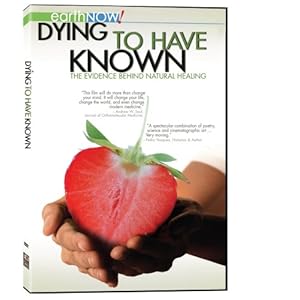
dying to have known is a documentary that tackles the dicey subject of cancer treatment using  gerson therapy.

i blogged about gerson therapy some time back (check the labels) but if you are still on the fence, watch this documentary. watch how the director (a fence sitter) eventually sided with the gerson therapy and poses serious questions of whether the medical industry is suppressing the effectiveness of the gerson therapy.

if you are having health problems, cancer or not, watch it and learn something. if the therapy is good for curing cancer, just imagine how it could improve your health.

again, i have put them on a server for you to download. for a limited time only...   dying to have known


if you are the sort who only watches mindless action movies, or stupid repetitive serials, give yourself a break and watch something informative.

if you have to pick just 2 documentaries to watch this year, i highly recommend this 2.

i can't think of a higher recommendation than this.

over to you.